How does the gender binary impact our perception in witchcraft, spirituality, and cosmology?
I wrote this articles back in August of 2024, but feel more inspired to share it now as the political climate in the US becomes more restrictive around queer, non-binary, and trans rights.
Trying to write queer and transgender language out of public life is a tool of oppression and we should do what we can to resist it. While we can’t always immediately change what is happening on a broad scale, we do have the power to change or at least educate within our own communities around queer and trans issues. I am writing this for my fellow witches, spiritual healers, and folks interested in how the use of binary systems like masculine/feminine as a spiritual concept can impact queer practitioners. These are just my opinions from my genderqueer perspective. I obviously don’t speak for all trans/queer people. There are over 8 billion people in the world each with our own nuanced experiences. Please keep that perspective in mind as you read this article.
(If you’d rather, listen or watch me read the article over on Youtube)
.
In this article I will
- Explore the archetype of the witch as a politically Queer identity.
- Outline the links between gender and witchcraft under patriarchy.
- Share my take on how concepts of ‘masculine’ and ‘feminine’ energy in spiritual spaces can potentially undermine or erase genderqueer, genderfluid, and non-binary experiences.
- Offer some inspiration for queer practitioners
Table of Contents
- Experiencing the Universe in a Queer Body
- The Witch Archetype as Queer
- Do Gods Have a Gender?
- The Magic of Being GenderQueer in a Betwixt Universe

Experiencing the Universe in a Queer Body
The Universe is a genderless being; the ultimate Androgynous archetype. But maybe even that is too human, too anthropomorphic. The Universe is multitudes. Existence is many things, made up of everything, sometimes containing binaries, and also containing so much more.
To me, the Cosmos is a queer place in the sense that it is The Mystery, a void, nothing and everything. It can’t fit into human ideas of male or female, both or none. It is an enigma that just is and not necessarily a puzzle that needs to be solved with definitions.
The human body is a container of multitudes, tiny cells, little atoms, microscopic bacteria. An emotional and spiritual body that is mostly invisible to human eyes but certainly felt and experienced.
No matter how hard society tries to reduce what is on offer in this life in terms of male/female, there is so much more complexity in how we can exist in this world and others. We get to be strange, earthy, and celestial beings living in this Universe–a multidimensional space.
My engagement with the forces of creation is not inherently a gendered experience. But I have been conditioned in a society that has paired tempestuous rain storms with unhinged women and lightning with powerful god-like men.
For humans, language matters. Language is a tool that can be harnessed to expand our vision of what is possible. Language can also be used to oppress and further distance ourselves and others from our own identities, experiences, and the essence of who we are. Sure in the spiritual realm maybe everything is merged into a sense of oneness and this topic doesn’t have as big a hold there, but it certainly matters in our everyday, material realities, and impacts how we engage with our spirituality.
If we want a chance at healing from the harmful systems that distort our clarity around sex/gender in our spiritual and material realm, we need to look at one of the oldest oppressive systems in place, patriarchy. Let’s get into it.
The Witch Archetype as Queer
For me the Witch archetype is a Queer one. Let’s define what I mean by Queer. Queer is a social concept that can mark someone as other. Once a slur, Queer is a reclaimed term that can capture the feeling of existing in a body outside of heteronormative expectations, political agendas, goals, and values. The concept of queer can be applied to our sexual orientation or gender experience; revealing a deep calling from within that flavors our attraction as different from the ‘norm’. Not all LGBTQ+ people relate to this concept, but many do.
Now that we have a working definition of Queer, let’s explore the archetype of the Witch in more detail. Historically, the Witch has represented otherness. A figure who has been viewed as a disruption to social norms, which are defined by the current of the times. For example, the European witch trials, which lasted from the 14th to the 17th centuries, largely targeted women (source).
These women were typically not actual witches. Although some were like Bessie Dunlop written about in detail by Emma Wilby in her book Cunning Folk and Familiar Spirits: Shamanistic Visionary Traditions in Early Modern British Witchcraft and Magic. Despite some examples of actual witchcraft practitioners being put on trial, these were mostly women who represented a challenge to societal norms. These women held “too much” wisdom or carried knowledge that posed a threat to patriarchy and the rise of capitalism.
In her book Caliban and the Witch, Silvia Federici explores femicide and the European witch trials, and the oppressive systems put in place to exploit women’s bodies to birth laborers for the capitalist economy. Knowledge of contraceptives, birth control, and how to have personal control over one’s reproduction were systematically stripped away from the people throughout the transition to capitalism. Many of the people who were targeted were folk healers and women with this knowledge. At least 85% of the people killed during the witch trials were women and with them much ancestral plant and magical wisdom was lost.
While the people put on trial as witches where not witches as we understand the term today, the use of state violence against marginalized groups, in this case women, has left deep scars on our collective psyche. Contemporary witches and queer folks who connect with this archetype can reclaim this subversive figure and take up the mantle of what the Witch represents in the fight for liberation.
The witch can disrupt, and often does through the default of their existence by being queer or representing some type of otherness. In this way, the Queer Witch’s body is not just a vessel for showing how human’s vary in sexual orientation and gender but also as a reflection of how queerness can show up in our spiritual lives and social justice work.
There is an entire movement of Queer people engaging in magical practice as a form of transformation, community healing, and resistance. Folk magic is anchored in the idea of the magic of the common people, doing things without permission, and in defiance of systems that do not have our best interests in mind. We find an example of this in Black traditions of folk magic and resistance in the US found in Hoodoo, conjure, and root doctoring.

The Witch is Coded Female, why this matters
The Witch archetype is coded female. Under patriarchy, spiritual practices or activities categorized as ‘feminine’ are taken more or less seriously depending on how threatening to dominating systems they are at the time. In other words, how much of a threat are women, fems, and queer folk’s interests and activities to the flow of reproduction and labor under Capitalism.
For example, over the past several decades, outside of some fundamentalist religious circles, witchcraft has been categorized as frivolous, silly, and ‘unreal’ in our secular society. Witchcraft has been mostly viewed as an innocuous hobby practiced by women and weirdos. At the same time, it has been fully exploited under the Capitalist machine.
The idea of witchcraft and being a witch has been sold back to us as an aesthetic identity. While this stuff can be fun and creative for our practices, witches know that there is something much deeper than witchy clothes and unique tools in play when one is tapping the ancient forces of nature. This power can never be taken from us, repackaged, or sold back to us.
But with the rise of Christian nationalism, I fear, we will see more instances of overt vitriol towards spiritual or religious practices that deviate from Christianity. A mechanism of control exerted by fundamentalist Christian churches is to direct intense fear and hatred towards those deemed as other, painting them as having diabolical and evil origins. This acts to dehumanize the ‘other’ and plays a part in justifying acts of violence against the marginalized groups.
It should also be pointed out that folk witchcraft practices are often linked with things relegated to the ‘feminine’ domains of life, emphasizing the needs of the human condition, grief work, healing, resting, emotional awareness, empathy, repair, love, safety, connection, community, and respect for the Earth-which can be antithetical and threatening to the constant growth and productivity needs of capitalism.
When more baneful aspects enter into folk magic, it tends to be a survival and protection mechanism. The magic of the oppressed can shore up defenses or employ offensive strategies against systems that seek to root out perceived threats or difference through subjugation, violence, and control. The more radical Witch archetype is poised to take on this fight with their fingers in the dirt and their hearts in the Underworld with the faeries.
As the deepening disdain towards queer and trans people becomes more mainstream with Christian nationalism gaining more power, trans and queer folks can become a scapegoat for Society’s growing fears and anxieties.
We have seen this in the past and it is happening now to trans people in the US. We have to stay vigilant and protect each other from propaganda that serves to reinforce gender binaries that in turn will strengthen the patriarchy.

Do Gods Have a Gender?
Now that we have some background on gender and witchcraft, let’s shift gears and get more esoteric.
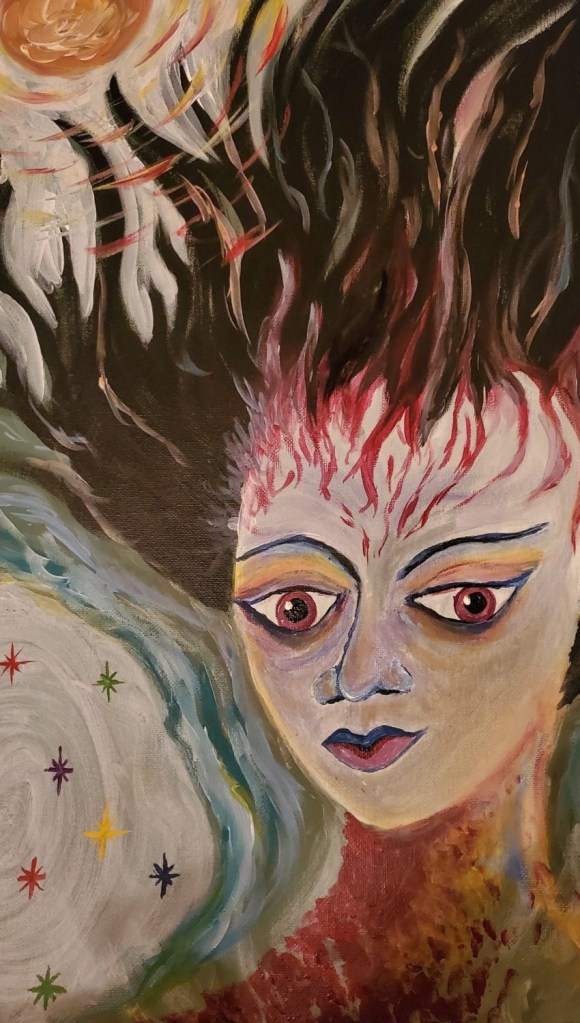
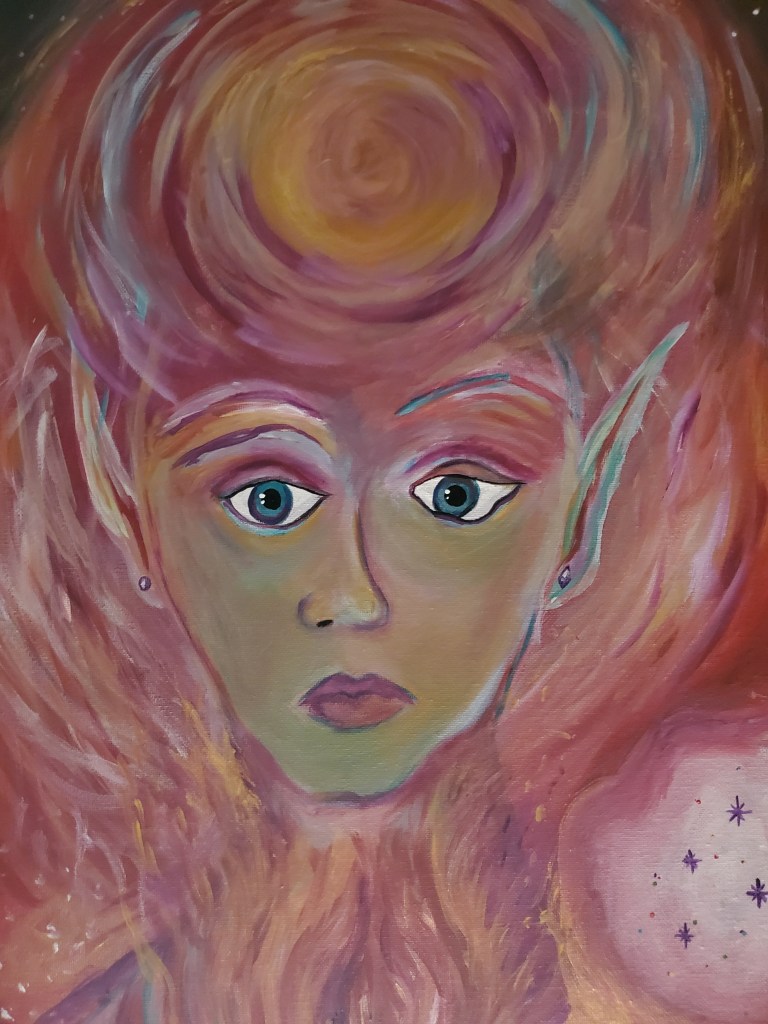
There is a queerness about the spirit realm that seems to reveal itself through this prismatic shapeshifter energy. Many Faeries, angels, insect spirits, plant spirits, serpent, animal, and avian beings seem to be illuminated by something that is not male or female. Whatever their opalescent ghost-like spirits are hinting at, they show up as something in-between or outside of gender completely.
The deeper we go into the spirals of time and the ancient past, the more concepts of gender seem to dissolve. Entities that come to us from these altered states of consciousness and dimension, seem to have a different construction of what ‘gendered’ energy is or how it is understood and performed in their world.
As a witch who petitions the old forces of nature, especially plant spirits, their energy to me, is often ambiguous, but not always. For example, traditionally and in my experiences with plant spirit journeys, peyote tends to come through as a masculine grandfather-type spirit and ayahuasca tends to be more feminine.
As I am not an initiate or practitioner of plant medicine traditions related to peyote or ayahuasaca, I certainly don’t have an opinion on how these indigenous traditions work with regard to spirits as feminine or masculine. I want to be mindful of not inserting my queer experiences in this context and to let things be what they are.
But it does make me wonder, how does a spirit become or come through to us as more masculine or feminine or neither? When I do happen to see the energies of masculine/feminine I’m assuming these are at least somewhat coming from how I’ve been socialized in a world where gender is socially constructed.
What’s taught in some traditions is that the spirits don’t necessarily have any forms at all and use what our consciousness is familiar with to make contact with us. They come through based on our ancestral and spiritual lineages and cultures in the guises and forms that will make sense to our nervous systems, minds, and consciousnesses.
Author R.J. Stewart expands on this idea in the book The Spirit Cord writing in reference to spirit bodies, “Remember that these are descriptive terms bound by human culture… the perfect description rests solely in contemplation of the entity that we seek to describe….that issue out of the void (Being from Non-Being)….This gives a rhythmic continuity or repetition to the cosmos, though this continuity is by no means rigid or unchanging.”
In my spiritual practices, I will note if a spirit is more gender neutral or androgynous and also take note if they have what I experience as leaning more towards the masculine or feminine. I do reject the idea though that I have to balance some external socialized ideas of masculine and feminine in order for my spirituality to be valid. But I am willing to wrestle with the idea that the Cosmos carries these principles in some form. I see the Cosmos, the Void, and creation as a space of inclusion and expansiveness, more like a spiral with many branches and dimensions rather than a line or a binary spectrum.
Perhaps somewhere in the origins of creation a concept of qualities and expression show up in what could be termed ‘gender’ but not in the way that it has been socially constructed and used to subjugate, exclude, and harm us under patriarchy. And certainly engaging with or questioning what gender is in the spiritual dimension should not be used to justify any gender essentialist ideologies (you can read more about gender essentialism in this study).


Who Gets Invited to the Women’s Full Moon Circle?
I don’t think our perception of spirits leaning in favor of masculine/feminine energy is necessarily a negative thing, but there is some nuance I want to work through here. I will try my best to articulate what I mean, but if I miss any key points that you feel are important, please add your thoughts in the comments section below.
What I have noticed with some spiritual content/practitioners/readers etc., when terms like masculine and feminine are used it is often accompanied by a statement such as ‘this is not to imply anything to do with gender or assigned sex but instead roles or energy.’ I want to push back on this sentiment. While typically well meaning, I feel it misses an important point–because as we know language matters. We can’t help that we’ve been conditioned within a society that instantly has us conjuring up certain traits associated with these particular words, even if they are just ‘representing the energy’. Energy very much matters to a witch.
Because of the patriarchal world we are in, including many of the spiritual teachings and traditions, the way we relate to gender is deeply woven into us. We can work to unpack this and remove ourselves from this conditioning as best we can. But these systems persist all around us and impact our lives everyday, including how we get to show up and how we are perceived in our communities.
I think it can be very helpful to use the concept of a female deity or male entity to better define and understand the principles, healing potential, or kinds of magic we are being called to work with. I wonder if we can consider when these distinctions are more or less helpful though by asking if they end up serving to write genderqueer and non-binary people out of the spiritual narrative or space? Or when they can be empowering like in the experience of a transgender women connecting with feminine power through goddess worship.
What has so stealthy made its way into spiritual practice is the conflation of societal hetero and cis binary gender expectations mapped onto the metaphysical dimension. For example, in the tradition of witches working with a spirit mate, I have come across writing that says, if you are a women you will have a male spirit mate and if you are a man, a female spirit mate.
It is hard to engage with this type of teaching if on the surface our gender experience is not included. As my dear friend and transgender swamp witch says of this binary way of constructing the Universe, “it insinuates that genderqueer people inhabit spiritual spaces in which the dominant cosmology does not include them.”
I think these are important ideas for the Queer seekers of the mysteries to contemplate in our evolving ‘witchosphere.’

The Magic of Being GenderQueer in a Betwixt Universe
Let’s focus on the ways we Queer Witches can weave more mystery, magic, and expansiveness into our Earth based spiritual communities, covens, and personal practice. If you don’t consider yourself Queer, this content can still be helpful for supporting the queer people in your life.
Rejecting concepts of gender in our cosmologies can be one way to work on healing this core wound for those of us who don’t align with our assigned genders in our bodies or in our spiritual realities. But I also want to invite more nuance into the mix.
For all my desire to do away with the binary, I can’t deny that gender and my relationship to it has been a massively important ingredient in my initiation into Witchcraft. It has defined so many moments, including the entities I have partnered with and the kinds of inner/psychological and personal work I have had to heal from to get stronger in my Craft.
I feel it is best to approach the spiritual world for what it is, a place that can be much more fluid and less restricted by definition than in our material reality. If we are physical manifestations of this unseen spiritual dimension, a profoundly mutable dimension, then we also contain the potential for cultivating this variety and expression as a part of our path and spiritual work as genderqueer or non-binary folks.
For instance, I have found my genderqueer expression and acceptance greatly enhanced by connecting with Faery Kings and other so called ‘masculine’ and other androgynous entities. Working with these beings has provided me ongoing support in healing my relationship to masculinity. Because even in a world where gender is constructed, I can’t deny the great impact being a genderqueer person socialized female has had on my life experiences.
Of course, there are always other layers to traverse. What if I were to tap even deeper into the essence who we are? There is this betwixt intersection of everything and nothing, when we accept and absorb the identities of our humanness, we can pass into a profound feeling of just being, entwined with The Mystery, consumed by the ineffable, a place where identities merge into the void.
What do you think? Ask yourself, what role has the concept of masculine and feminine energies played in your practice or the development of your power and magic as a Witch?

Towards a more Queer Craft
Let’s commune with our queer spiritual kin, our queer ancestors, androgynous Witch-parents and others beings that might have queerer work to do in this world.
I want to see an ecstatic and traditional Witchcraft topography that more fully embraces the transgressive nature of our radical roots. I am wondering how we can incorporate a more genderqueer and gender fluid inclusive witchcraft that doesn’t rely on gender stereotypes of male/female. I appreciate where traditional witchcraft and faery faith traditions have hinted at a more queer cosmology (the work of Lee Morgan, Storm Faery Wolf, and T. Thorn Coyle comes to mind)
Maybe it’s time we soften our gaze and view the spirit realm through a more changeable lens; just like us shifting from a clump of cells to a baby to an aging body or a plant going from seed to bloom. There are many faces that nature wheres, even a single entity over its lifetime. We are never just one thing. We are a collection of our ancestors composed of many bodies and souls; we are descended from all of nature, plants, animals, other species of humans, and even the stars.
To me this is a witchcraft cosmology rooted in its multidimensional Queerness.
 EMERALD VISIONS
[…] beings of Lilith and Azazel and Fallen Angels, it lends credence to the subversive spirit that The Witch archetype […]
LikeLike